8 Strategies That Actually Impact Brand Visibility in LLMs in 2026 (With Data & Sources)
What actually gets your brand cited in ChatGPT, Perplexity, and Google's AI features? 8 strategies backed by studies, tests, and platform documentation.

There's no shortage of advice on how to show up in ChatGPT, Perplexity, and Google's AI features. Much less of it comes with evidence. These 8 strategies are the ones backed by studies, controlled tests, or the AI platforms' own documentation. They're ordered the way the work usually goes: make sure AI tools can reach you, give them content worth using, then build your presence beyond your own site.
Visibility here means three things. AI tools name your brand when people ask about your category. They cite your pages as sources. And they describe your company accurately.
Most of the research comes from SEO tool companies, and most of it measures correlation. I've noted when a study can't show cause, so you can weigh it yourself.

1. Make sure AI tools can actually reach your site
This comes first, because an AI tool can't cite a page it can't access. Each AI company runs its own crawlers, and blocking them, on purpose or by accident, removes you from their answers. OpenAI says sites that block its OAI-SearchBot "will not be shown in ChatGPT search answers." Perplexity and Anthropic give similar guidance for their search crawlers.
Blocks don't only come from robots.txt. CDN and firewall settings can stop crawlers too. In September 2026, Cloudflare changed how its controls work, and its Block setting now also applies to Googlebot and Bingbot, because they collect data for both search and AI. Cloudflare's own advice is: "To stop training and keep search, use Disallow AI Training."
For Google, a page must be indexed and eligible to show with a snippet to appear in AI Overviews or AI Mode. Since August 2026, Search Console also has a setting that opts a site out of Google's generative AI features. Make sure your site is still included.
My free crawlability checker tests whether Google and the major AI crawlers can reach a page.
2. Rank in search for your topic and the questions around it
Many AI answers start with a search. This is called retrieval-augmented generation, or RAG. The AI tool searches the web, pulls in a few pages, and writes its answer from them. Google says its AI features rely on its "core Search ranking systems to retrieve relevant, up-to-date web pages". Microsoft says Copilot sends Bing a search query of "a few words informed by the user's prompt" and builds its answer from the results. I explain how this differs from what a model learned in training in RAG vs. Parametric Knowledge.
Those searches aren't always the user's exact question. Google's AI features run what it calls query fan-out, a set of related searches across subtopics. That may explain why AI Overviews cite many pages beyond the top results for the main query. In March 2026, Ahrefs found that only 37.9% of URLs cited in AI Overviews also ranked in Google's top 10 for the same search.
So rank for your main topic, and also for the narrower questions around it. Give each page a clear title and headings that say exactly what it covers. There's no direct evidence that this changes which pages AI tools pick, but it helps search engines match your page to those shorter searches. Don't build a separate page for every variation of a query, though. Google warns that doing that to manipulate its AI answers violates its spam policies.

3. Explain clearly what you do, in the same words everywhere
AI tools piece together what your company does from your own site and from what other sites say about you. If those sources disagree, the picture gets blurry. Say your homepage calls you a "customer engagement platform" and your product page calls you a "CRM tool." An AI tool has two different answers to choose from.
Overthink Group ran 1,263 prompts across 250 B2B software categories in June 2026. Its advice is to "make sure your own website, G2 profile, and other online company profiles consistently mention what your product does."
Start with your own site. Make sure your product, use-case, integration, and pricing pages say plainly what you do, who it's for, and what it costs. Then write one short description that covers your category, your audience, and the main problem you solve. Use it on your website, review profiles, LinkedIn page, and directory listings.
4. Write thorough, original content that's easy to pull from
Pages that get cited tend to answer a topic fully and make the answers easy to find. Semrush compared about 305,000 pages cited by AI tools with pages that only ranked in Google. Cited pages scored 32.83% higher on clarity and summarization and better on section structure. SE Ranking found articles over 2,900 words averaged 5.1 ChatGPT citations, compared with 3.2 for pages under 800. Both are correlations, and longer pages often sit on stronger sites.
Formatting tricks don't seem to be the answer. C-SEO Bench, presented at NeurIPS 2025, tested common rewriting tactics like adding statistics and quotes. It found most were "largely ineffective", and traditional SEO was "significantly more effective."
Google points in the same direction. Its AI guide says there's no ideal page length, and it recommends "unique, expert-led content that provides value beyond common knowledge." So cover the questions a reader would ask. Lead each section with the answer. And add what only you can offer, like original data, real examples, and expert experience.

5. Publish your own honest comparison pages
Your own comparison pages can show up in AI answers. Ahrefs studied ChatGPT's answers to 750 recommendation prompts. In the software category, when a company was recommended, a list it had written about its own category showed up in more than a third of those responses.
Pages that help someone choose seem to do better in general. Seer Interactive ran about 10,000 finance and SaaS questions through GPT-4o and found that "solution-oriented websites" were more likely to appear in its answers.
Write pages for the comparisons your audience actually makes, like "[your product] vs. [competitor]," "[category] alternatives," and "best [category] for [use case]." These match the way people phrase recommendation questions. Be honest about who each option fits, including when a competitor fits better. A page that only promotes you is less useful to readers.
6. Keep your important pages up to date
AI tools lean toward recently updated pages. Seer Interactive studied 47,097 citations from ChatGPT, Gemini, and Perplexity in 2026, across four brands. 75% of the pages they cited had been updated in the last year, but only 42% had been published in the last year. Ahrefs found the same direction in a much larger dataset. Pages cited by AI assistants were, on average, fresher than pages in Google's organic results.
The gap in Seer's numbers is the useful part. Freshness mostly came from updating existing pages. So review your most important pages on a schedule, especially on topics like pricing and product comparisons. Make real updates. Changing the date without changing the content doesn't help readers.
7. Use IndexNow to get updates to Bing and Copilot faster
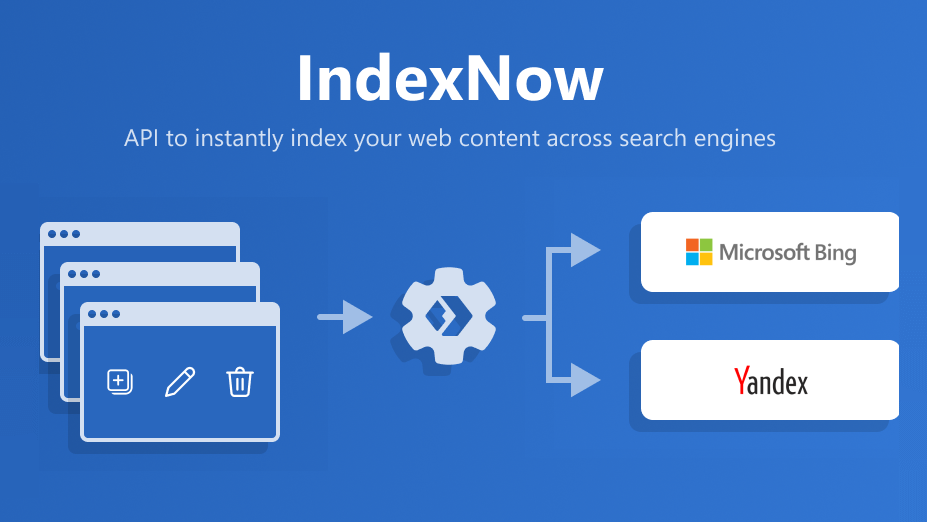
Copilot finds sources through Bing, and IndexNow lets you tell Bing right away when a page is added, updated, or deleted. Bing, Naver, Seznam.cz, Yandex, and Yep support it. Google doesn't.
Bing has tied this directly to AI answers. In February 2026, its team wrote that IndexNow "helps ensure that AI systems reference the most current version of a page when generating answers." It's a small, low-effort step, and it mainly affects Bing and Copilot. It pairs well with keeping your pages current.

8. Get your brand mentioned on other websites, starting with the lists AI tools cite
AI tools describe your company based on what the rest of the web says about it. Brand mentions line up with AI visibility much more closely than backlinks do. Ahrefs studied 75,000 brands across ChatGPT, AI Mode, and AI Overviews. Branded web mentions correlated with AI visibility at 0.66 to 0.71, and YouTube mentions had the strongest correlation, at about 0.737. Backlinks correlated only weakly. These are correlations, and the metrics may simply reflect how strong a brand already is. So the study can't prove mentions cause visibility.
The most direct mentions to go after are in "best X" lists. In the same Ahrefs study of ChatGPT recommendations, "best X" blog lists made up 43.8% of all cited page types. Ahrefs also saw "a strong trend towards companies and products that ranked higher in the associated list." Search for the "best X" articles in your category, and check which ones AI tools cite when you ask about it. Check each AI tool separately, because they lean on different sources. In Overthink's study, Google's AI tools were "far more likely to cite actual vendors than ChatGPT and Perplexity." Contact the authors with accurate, current details about your product, and offer a demo or trial so they can review it firsthand.
Review sites matter too, especially for how you're described. People ask AI tools about a product's weaknesses and pricing, and reviews are one place those answers can come from. In Overthink's study, Perplexity produced more than 71% of G2's citations. Keep your review profiles current, and ask happy customers for reviews as part of your normal process.
Beyond lists and reviews, the work looks like good PR. Earn coverage where your audience pays attention, like industry publications, podcasts, and YouTube videos. I cover where to focus in Off-Page SEO for AI Search.
Popular tactics that don't seem to work
Two common recommendations haven't held up when tested.
Schema markup. Ahrefs tracked 1,885 pages that added schema and compared them with similar pages that didn't. Citations in AI Mode and ChatGPT didn't meaningfully change. Google says structured data "isn't required for generative AI search." It's still useful for rich results.
llms.txt files. SE Ranking studied about 300,000 domains. Removing llms.txt from its model actually improved the model's accuracy, which suggests the file "might currently introduce more noise than value." Google says Search doesn't use these files. I cover this in Do You Need an llms.txt File?
How do you know if these strategies are working?
Check how AI tools see your brand on a regular schedule, and look at trends over weeks. A single check won't tell you much, because AI answers change from one run to the next. SparkToro had about 600 volunteers run the same recommendation prompts nearly 3,000 times. It found a "<1 in 100 chance" that ChatGPT or Google's AI would give the same list of brands twice. So track how often you appear across many runs. Ignore your position in any single answer.
Start with the free reports you already have. Search Console shows how often your links appear in AI Overviews and AI Mode. Bing Webmaster Tools has an AI Performance report for Copilot citations. GA4 groups visits from ChatGPT, Gemini, and Copilot into an "AI Assistant" channel. To compare yourself with competitors, run the questions your audience asks in the AI tools they use, and note which brands get named. Read how each answer describes you, too. Check whether it gets your category, strengths, and pricing right.
Why you should test these strategies yourself
Most of the evidence here is correlation, and results vary by industry and by AI tool. What works in one category may not move anything in yours. So treat these strategies as starting points, and test them on your own site.
Keep the tests simple. Pick a few pages, make one change, and leave similar pages alone so you have something to compare against. That's how Ahrefs ran its schema test above. Then re-run the same questions in the AI tools your audience uses for a few weeks, and see whether the pages you changed get cited or mentioned more. Small, careful tests like this will tell you more about your own audience than any study can.
How these strategies fit together
They build on each other. AI tools have to be able to reach your pages and find them through search. Your company has to be described clearly and consistently. Your pages have to answer real questions and stay current. And the rest of the web, especially the lists and publications in your category, has to be talking about you. Most of this is good SEO and good PR. The tactics aimed only at AI haven't held up when tested. From there, test what works in your category, measure it, and adjust.
If you want to know where your brand stands today, an AI visibility audit shows how AI tools describe your company and which competitors they recommend instead.